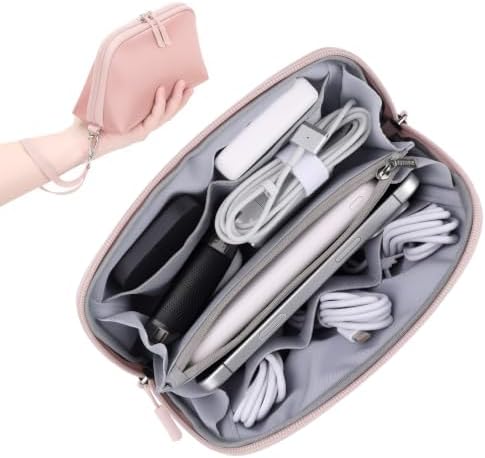
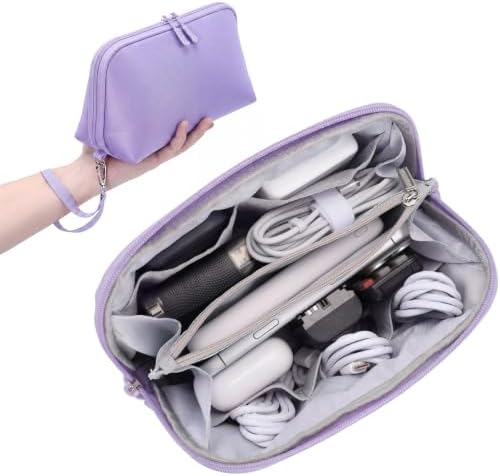
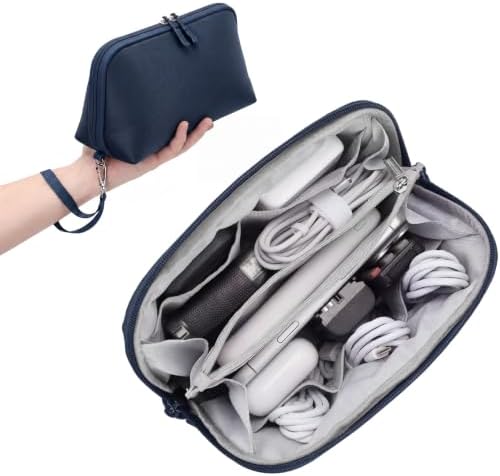
Travel cable organizer, 8 compartments, green
4.6 out of 5 (154)
In stock

Cables do not tangle in the bag. They tangle in the hand, in the ten seconds of stuffing them away, and the bag only finishes the job. The fix is not discipline, it is geography: every cord gets one home, and the home is shaped so a hurried hand cannot do it wrong.
The system is one sentence long: a cord lives in its slot or it lives in your hand, and there is no third place. A pouch with mesh pockets makes this cheap to obey, because the slot is visible and reachable in the same second. The moment cords share a pocket, the oldest two are already braided.
The corollary is that the pouch stays packed. The travel charger is not the desk charger; it is a second charger that never leaves the pouch. Buying the duplicate once ends the nightly unpacking forever, and it is the single change people thank us for.
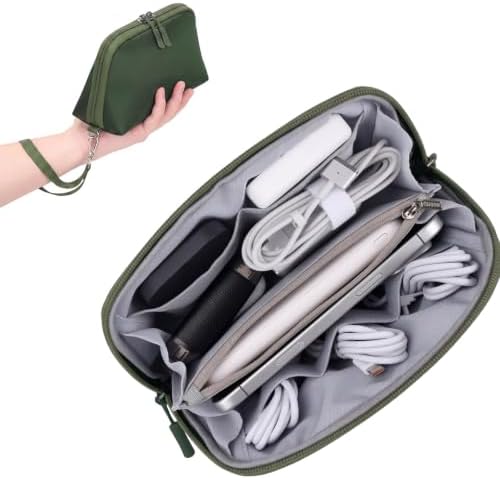
A cable wound tight around a hand or a brick remembers the winding, and the memory becomes the kink, and the kink becomes the cable that only charges at one angle. Loop it loosely to the size of your palm and lay it in its slot. The mesh holds the loop; the loop does not have to hold itself.
This is also why pouch compartments beat cable ties. A tie has to be applied well every time; a slot only has to be there.
The tidy-minded instinct is to sort cables by kind. The version that survives contact with an airport sorts them by trip: the everyday set in the small pouch that moves between bags, the full travel set in the large one that lives in the suitcase, and the odd, rarely used adapters in the compartment pouch at home where dividers keep them findable.
Sorted this way, packing is moving one pouch from the shelf to the bag, and nothing gets forgotten because nothing gets decided at the last minute.
The drawer of mystery cables is a separate problem, and a pouch full of them is just a portable drawer. Once a year, pair every stray cord with a device that still exists. The orphans go; the survivors get slots in the compartment pouch, one each, visible through the mesh.
A cord you can see through the mesh is a cord you own. A cord at the bottom of an opaque drawer is a cord you will buy again next month without knowing it.
4.6 out of 5 (154)
In stock
4.6 out of 5 (154)
In stock
4.6 out of 5 (154)
4.6 out of 5 (154)