Nintendo Switch game case, gamepad dot pattern white
4.8 out of 5 (2,776)

A Nintendo Switch game card is smaller than a postage stamp, and an evening at a friend's place needs the cards, not your console: theirs is already docked at the television. So the sensible unit of travel is the library. The case exists to make the library one solid object.
The console that leaves the house is the console that gets sat on, rained on, and left on a train. The cards weigh nothing, cost nothing to carry, and turn any docked Switch into your own. Bringing the library instead of the machine is the difference between packing a bag and patting a pocket.
Loose cards, though, are a countdown. They are small enough to vanish into a couch seam and light enough to leave a pocket unnoticed. The case turns a scatter of tiny cards into one block that is hard to lose and obvious when missing.
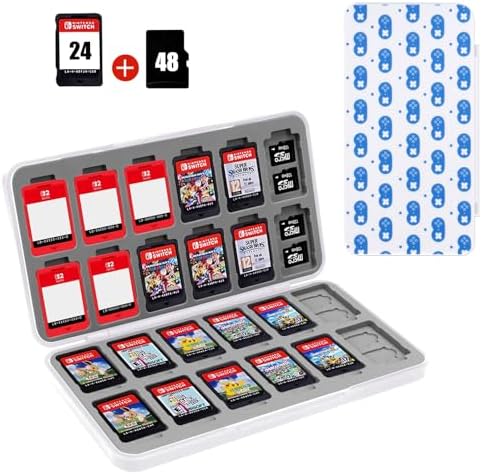
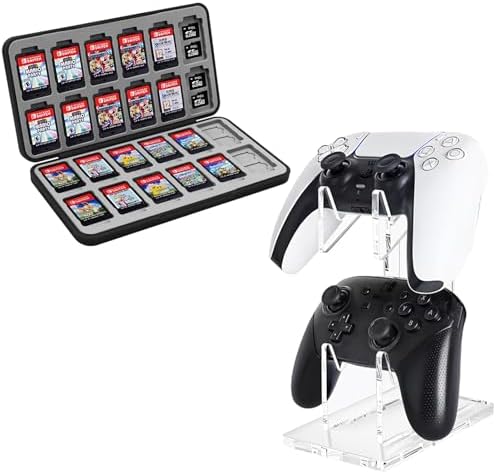
Inside the shell, molded silicone slots grip each card by its edges. The grip is the feature: turned upside down and shaken, the case gives up nothing, which is the test that matters for an object that lives in a backpack.
Beneath the game cards sit slots for memory cards, which are smaller still and easier to lose. Keeping both kinds in one case means the whole storage question closes with one lid.
The two halves close on hidden magnets with a firm snap, and that choice is deliberate. A plastic clasp is the first thing to break on any small case, and a broken clasp turns a card holder into a card spreader. Magnets do not fatigue, do not snag, and open without a fingernail.
The snap is also an audit: a case that clicks shut is a case that is actually shut, and the click tells your fingers what your eyes would otherwise have to check.
In a bag, the case belongs inside the travel pouch with the charger and the spare cable: one zipper opens the whole evening. In a jacket, it rides flat in the inner pocket, where its hard shell keeps the cards from sitting against keys.
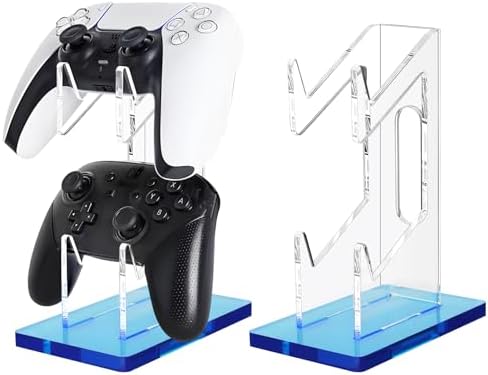
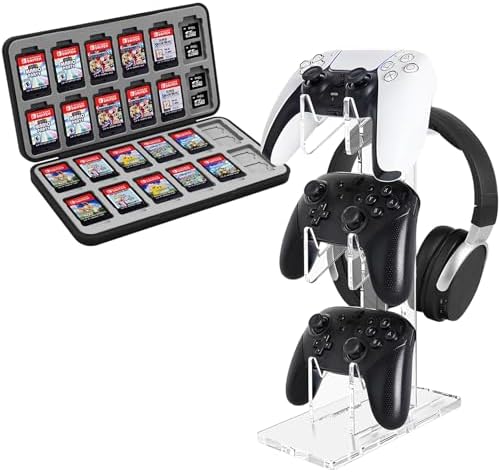
At home the desk shelf finishes the system. The controller stand racks the controllers in tiers instead of a couch-side pile, and the case lands in the same spot beside it, so leaving the house is two grabs, not a search.
4.8 out of 5 (2,776)
4.7 out of 5 (275)
null out of 5 (0)
null out of 5 (0)